Many business owners see compliance as paperwork, cost, or unnecessary formality. They focus on sales, clients, operations, and revenue, while legal and regulatory requirements are pushed aside. This approach may work temporarily, but it creates serious risk in the long run.
Compliance is not the opposite of growth. In fact, compliance is one of the foundations of sustainable growth.
A business that wants to grow, attract clients, enter new markets, work with large organizations, or build investor confidence must take compliance seriously.
Compliance Builds Trust
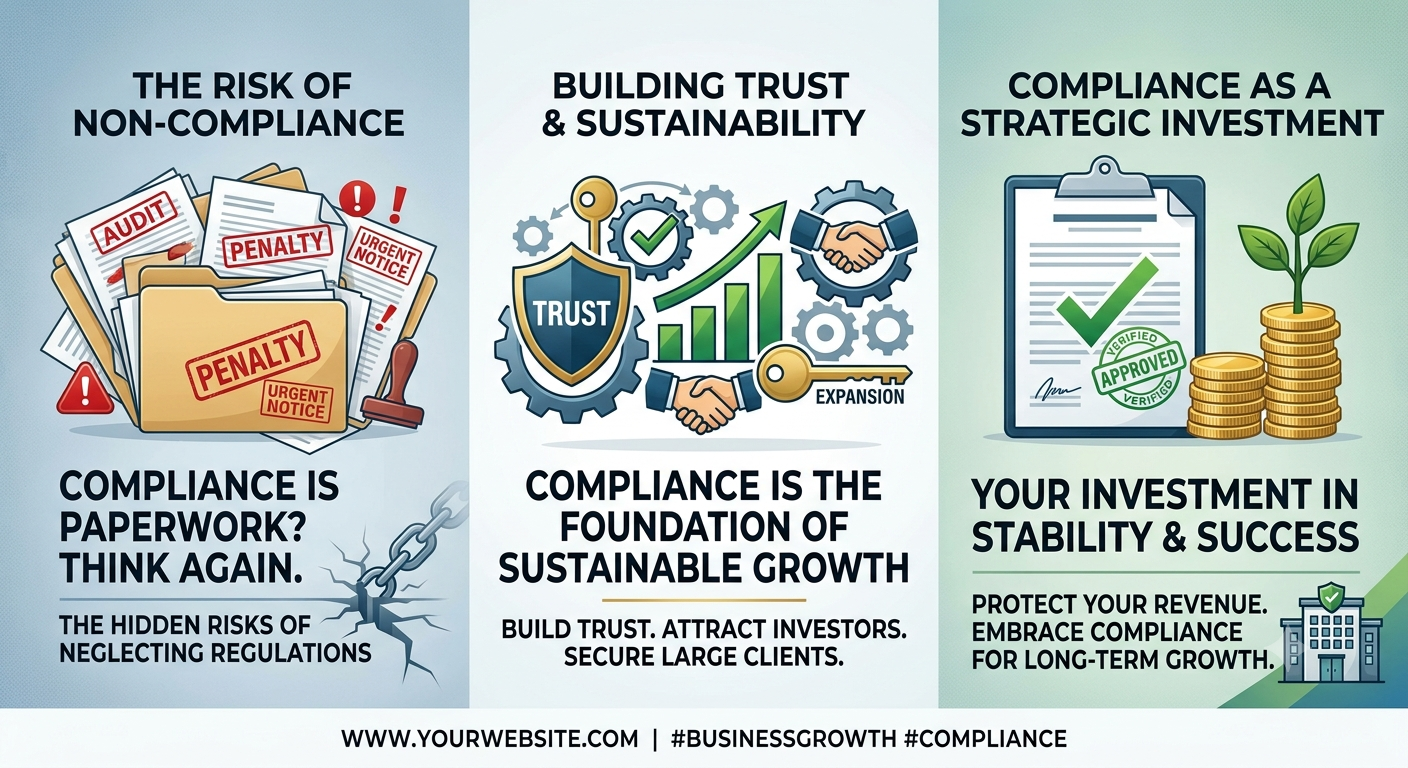
Clients, partners, banks, investors, and institutions prefer working with businesses that are properly documented and professionally managed. Compliance shows that a business is serious, transparent, and reliable.
A company with proper registrations, tax records, employee documentation, contracts, policies, and statutory compliance creates confidence.
Trust is a business asset. Compliance strengthens that trust.
Non-Compliance Creates Hidden Risks
A business may ignore compliance for years and appear successful. But one audit, dispute, notice, employee claim, tax issue, or client verification can expose weaknesses.
Non-compliance can lead to penalties, legal disputes, delayed payments, contract cancellation, reputational damage, and loss of business opportunities.
Many businesses do not fail because they lack sales. They suffer because their systems are weak.
Large Clients Require Compliance
As businesses grow, they often want to work with corporate clients, government institutions, international organizations, or multinational companies. These clients usually require proper documentation, policies, tax compliance, employee records, data protection practices, and legal agreements.
A business that is not compliant may be unable to qualify, even if it has good products or services.
Compliance becomes a gateway to bigger opportunities.
Compliance Protects Employees and Employers
Good compliance systems protect both workers and organizations. Proper appointment letters, attendance records, salary documentation, leave policies, social security, EOBI, tax deductions, and disciplinary procedures reduce confusion and conflict.
When employment terms are clear, disputes are easier to manage. When records are weak, even a small issue can become complicated.
Professional HR compliance is especially important for companies with growing teams.
Compliance Improves Internal Discipline
Compliance is not only about external rules. It also creates internal discipline. Policies, processes, approvals, records, and reporting systems help businesses operate more efficiently.
A compliant business knows who is responsible for what. It maintains records. It tracks decisions. It reduces dependency on verbal instructions and informal arrangements.
This improves accountability.
Compliance Supports Expansion
When a business wants to expand to another city, province, country, or sector, compliance becomes even more important. Expansion requires legal clarity, financial transparency, contracts, licenses, tax records, and operational systems.
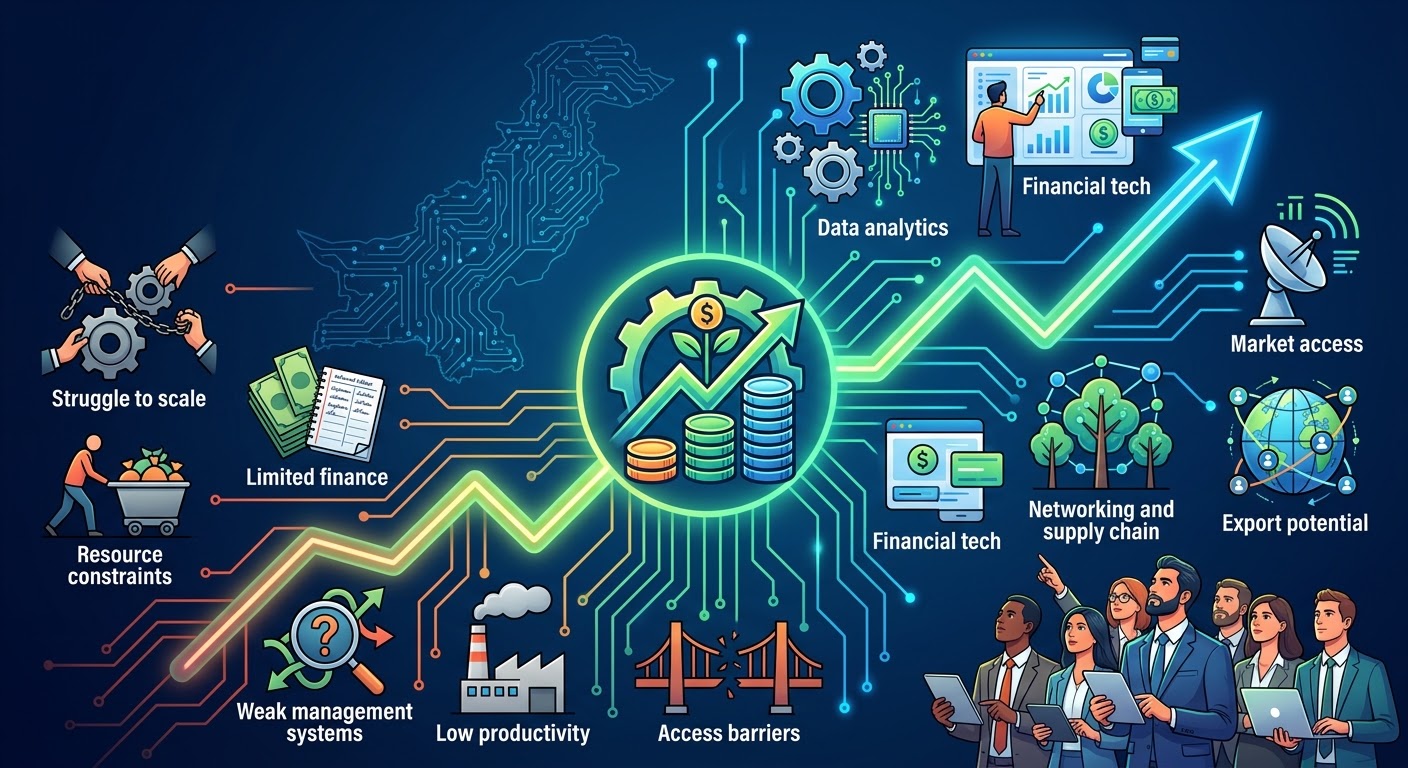
Unstructured businesses struggle to scale because growth increases complexity. Compliance creates the structure needed for expansion.
Compliance is an Investment
Instead of viewing compliance as a cost, businesses should view it as an investment in stability. It protects the business, improves credibility, supports growth, and reduces future risk.
Professional advisors, legal consultants, HR experts, tax professionals, and compliance specialists can help businesses build proper systems.
The earlier compliance is built, the easier it is to manage.
Final Thought
Compliance may not always create immediate revenue, but it protects the revenue you create. It may not appear exciting, but it gives your business strength.
Businesses that want short-term gains may ignore compliance. Businesses that want long-term growth must embrace it.
Growth without compliance is fragile. Growth with compliance is sustainable.