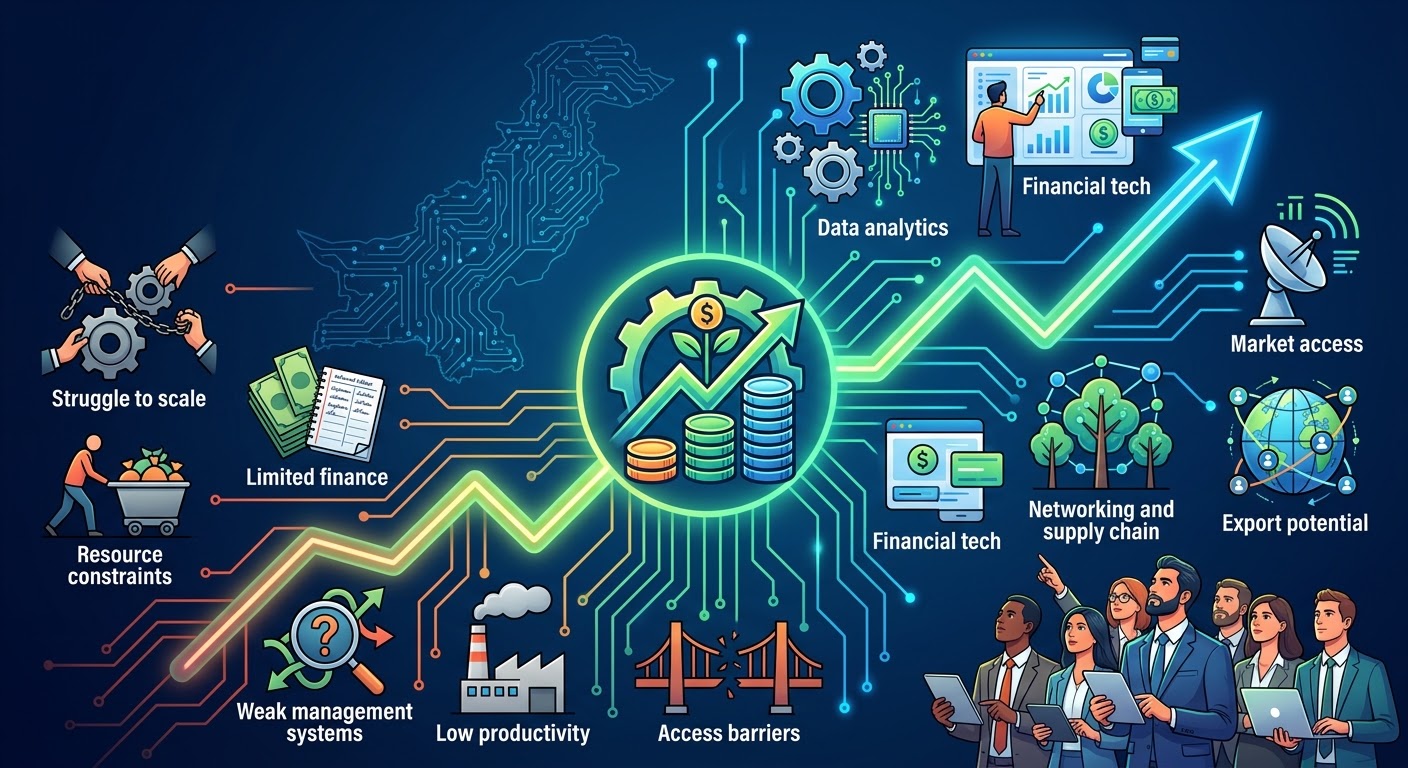

Pakistan and the United States have a long history of people-to-people connections, trade relations, professional exchanges, education links, and diaspora contributions. However, there is still much more potential to be explored between Pakistani and American businesses.
Building stronger business bridges requires more than meetings and introductions. It requires trust, compliance, understanding of markets, institutional collaboration, and serious follow-up.
Business relationships grow when both sides see value, credibility, and long-term opportunity.
The Role of Business Chambers
Business chambers can play an important role in connecting entrepreneurs, investors, professionals, and institutions. They provide a platform where ideas can be discussed, partnerships can be explored, and trust can begin.
For Pakistani businesses seeking entry into the U.S. market, chambers can provide guidance, networking, market understanding, and introductions. For American businesses exploring opportunities in Pakistan, chambers can help identify credible partners and sectors.
The role of a chamber should not be limited to ceremonial events. It should become a bridge for practical collaboration.
Compliance is the First Step
Many Pakistani businesses have strong products, hardworking teams, and competitive pricing. However, entering the U.S. market requires more than quality products. It requires compliance with standards, documentation, legal requirements, certifications, packaging, labeling, taxation, contracts, and customer expectations.
Compliance is not a burden. It is a passport to international business.
Pakistani companies that want to export or establish business relationships in the U.S. must prepare themselves professionally.
Opportunities for Pakistani Businesses
There are several areas where Pakistani businesses can explore opportunities, including textiles, IT services, food products, professional services, skilled manpower, healthcare-related services, education, logistics, and small manufacturing.
The Pakistani diaspora in the U.S. can also play a powerful role. Many Pakistani Americans understand both cultures and can help create partnerships, distribution channels, investment links, and business confidence.
Diaspora-led business bridges can become a major strength if organized properly.
Understanding the American Market
The U.S. market is large, competitive, and highly structured. Businesses entering this market must understand customer expectations, legal obligations, service standards, delivery timelines, branding, and professional communication.
American businesses value consistency, transparency, and reliability. Pakistani companies must be prepared to meet these expectations.
A good product may open the door, but professional systems keep the door open.
Investment in Both Directions
Business bridges should not be one-sided. Pakistani investors can explore opportunities in the U.S., while American investors can explore sectors in Pakistan.
Pakistan offers opportunities in technology, agriculture, energy, education, skills development, services, and manufacturing. However, investment requires confidence. Confidence comes from policy clarity, legal protection, transparency, and credible local partners.
Institutions, chambers, and business leaders must work together to reduce uncertainty and improve trust.
Social and Skills Collaboration
Business relationships should also include social and human development. Skills training, technical education, workforce development, women entrepreneurship, and youth enterprise can become important areas of collaboration. When business cooperation improves skills and livelihoods, it creates broader social impact.
Final Thought
Building bridges between Pakistani and American businesses is not only about trade. It is about trust, preparation, professionalism, and shared growth.
The opportunity is real, but it must be approached seriously. Pakistani businesses must become more compliant, more organized, and more market-ready. American businesses must see Pakistan not only through risk, but also through potential.
Strong bridges are built with vision, but sustained through action.