
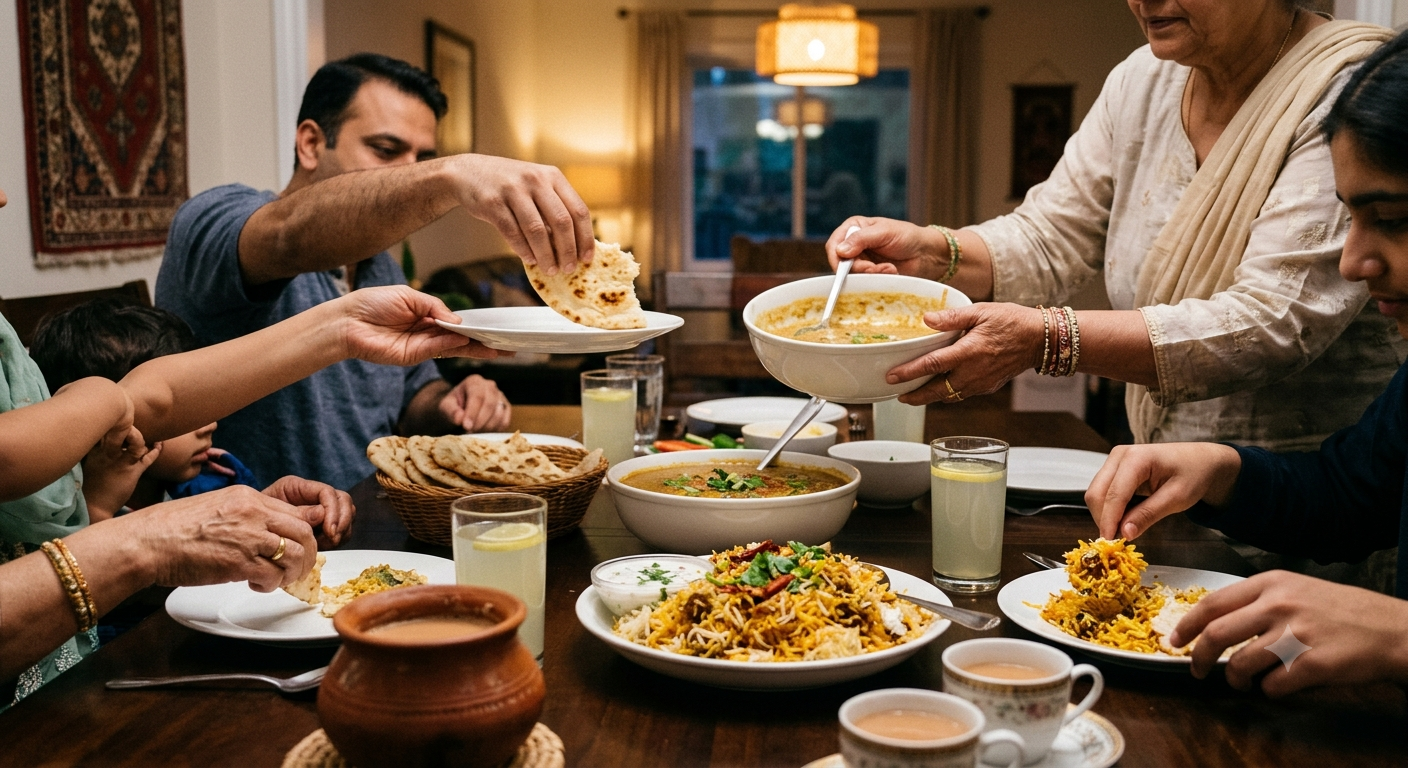
Food is more than taste. It is memory, culture, hospitality, identity, and connection. In our society, meals are not just served to satisfy hunger. They are shared to express love, respect, celebration, and belonging.
From family dinners to Eid gatherings, from wedding meals to community tables, food has always played a powerful role in bringing people together.
A shared meal can often say what words cannot.
Food Connects Generations
Many families carry recipes from one generation to the next. A dish prepared by a mother, grandmother, father, or elder becomes part of family memory. The aroma, taste, and style of cooking remind us of people, places, and moments.
Traditional food keeps cultural identity alive. When younger generations learn family recipes, they are not only learning cooking. They are learning history, values, and belonging.
Food becomes a bridge between the past and the future.
Meals Strengthen Family Bonds
In today’s busy life, families often struggle to spend time together. Work pressure, studies, digital distractions, and individual routines have reduced meaningful family conversations.
A shared meal creates a natural opportunity to sit together. It allows people to talk, laugh, discuss, and reconnect.
Family meals do not need to be expensive or formal. Even simple food, when shared with warmth, can strengthen relationships.
Hospitality Reflects Our Values
Hospitality is deeply rooted in our culture. Offering food to guests is a way of showing respect and affection. Whether it is tea, a homemade snack, a simple lunch, or a festive dinner, the act of serving carries emotional value.
However, hospitality should not become a burden of show-off. The true spirit of hospitality is not in expensive presentation, but in sincerity.
A simple meal served with love is more valuable than an extravagant table prepared only for display.
Food Builds Community
Food has the power to bring strangers together. Community food groups, neighborhood gatherings, charity meals, potlucks, competitions, and online food communities create connection among people who may not otherwise meet.
Through food, people share not only recipes but also stories, skills, memories, and appreciation.
A healthy food community can promote talent, encourage home-based entrepreneurs, support women, celebrate culture, and create positive social engagement.
Digital Food Communities
Social media has changed the way people share food experiences. Today, a dish prepared at home can be seen and appreciated by thousands of people. Food photography, recipes, reviews, and cooking videos have created new opportunities for recognition and income.
However, digital communities also require responsibility. Honesty, originality, respect, and ethical behavior are important. If people misrepresent dishes, copy content, or use misleading pictures, trust is damaged.
A good community is built not only on participation, but also on values.
Food and Emotional Well-Being
Shared meals also support emotional well-being. Eating together reduces loneliness, creates comfort, and strengthens social bonds. Many people remember not only what they ate, but who they ate with.
Food becomes part of our emotional language. It is how we welcome, celebrate, console, forgive, and remember.
Final Thought
Food is one of the simplest and strongest ways to connect people. It brings family members closer, preserves culture, supports community, and creates joy.
In a world where people are becoming more isolated, shared meals remind us of something very important: human connection still matters.
The real beauty of food is not only in the dish. It is in the people gathered around it.