
The Cost of Running a Business Informally in Pakistan
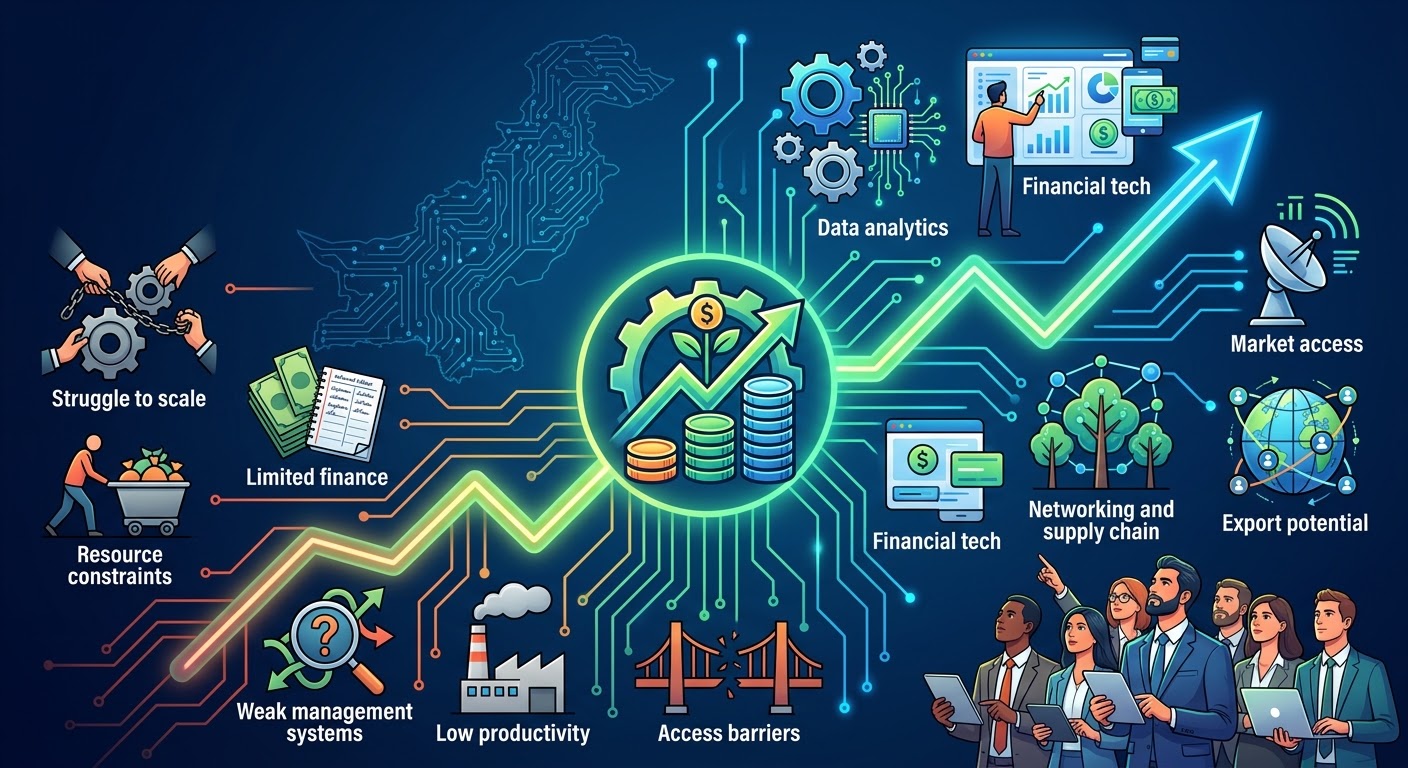
Many businesses in Pakistan begin informally. A family member provides capital, transactions are recorded in notebooks, staff are hired without contracts and payments move through personal accounts. This approach may appear convenient during the early stage, but informality creates costs that increase as the business grows. What initially feels like flexibility can later become a barrier to finance, partnerships, investment and expansion.
The first cost is weak visibility. Without reliable accounts, an owner may not know the real profitability of products, branches or customers. Cash shortages are explained as temporary, inventory losses remain hidden and personal withdrawals are confused with business expenses. Decisions are then based on impressions rather than evidence. A business cannot improve what it cannot measure.
Poor recordkeeping also weakens credibility. Banks, investors, institutional clients and international partners expect documented sales, tax records, audited statements, contracts and proof of ownership. When these are missing, even a commercially strong business may be treated as high risk. It may be unable to secure affordable credit, qualify for tenders or attract serious partners.
Weak contracts create another major exposure. Informal agreements often depend on trust and relationships. When circumstances change, memories differ and obligations become disputed. Clear contracts cannot eliminate every conflict, but they establish responsibilities, payment terms, quality standards, confidentiality, dispute procedures and exit arrangements. Their absence makes recovery difficult when a customer, supplier, employee or partner fails to honour a commitment.
Taxation fears frequently encourage businesses to remain undocumented. Yet long-term avoidance can create penalties, uncertainty and constant anxiety. It also prevents the enterprise from showing its true scale. Formalization should be approached through professional advice, accurate classification and gradual compliance rather than fear. The objective is not merely to pay taxes; it is to build a business that can operate confidently and transparently.
Informality also affects employees. Without appointment letters, job descriptions, attendance records, performance systems and lawful separation procedures, workplace disputes become personal. Good professionals may avoid joining because the organization appears unstable. The business then remains dependent on relatives or individuals who are trusted but not necessarily competent.
The cost becomes especially visible when the founder wants to expand, sell the company, bring in investors or transfer it to the next generation. An undocumented business is difficult to value and even harder to transfer. Its relationships, knowledge and authority may exist only in the founder’s mind.
Formalization does not mean creating unnecessary bureaucracy. It means establishing proportionate systems: separate bank accounts, proper books, written contracts, tax compliance, defined roles, documented processes and basic governance. These steps convert personal effort into organizational value. In Pakistan, the businesses most capable of scaling will be those that treat formality not as a burden, but as an investment in trust and growth.