Human Resource outsourcing has been present in Pakistan for many years, but its role is changing rapidly. Earlier, many organizations viewed HR outsourcing mainly as a way to reduce administrative burden or manage payroll. Today, the expectations are much broader.
Companies now need outsourcing partners who can provide compliance, workforce management, payroll accuracy, employee documentation, recruitment support, performance monitoring, and advisory services. HR outsourcing is no longer only a back-office function. It is becoming a strategic business solution.
Why HR Outsourcing is Growing
Organizations are operating in a more complex environment than before. Labor laws, taxation requirements, social security, EOBI, employee benefits, contractual obligations, and client reporting requirements all demand attention. Many companies do not have the internal capacity to manage these matters professionally.
This is where HR outsourcing becomes valuable. It allows organizations to focus on their core business while specialized service providers manage employment-related processes.
For growing businesses, outsourcing can provide flexibility. For large organizations, it can improve control, documentation, and compliance.
From Payroll to People Management
Traditionally, many businesses associated HR outsourcing with salary processing. However, the future of HR outsourcing in Pakistan will go far beyond payroll.
Organizations will expect outsourcing partners to manage employee onboarding, attendance, grievance handling, documentation, HR policies, training coordination, performance support, and compliance reporting. The outsourcing partner will need to act not merely as a vendor, but as an extension of the client’s HR function.
Compliance Will Become a Major Driver
As regulatory scrutiny increases, compliance will become one of the strongest reasons for HR outsourcing. Companies cannot afford casual employment practices, weak documentation, or unclear contractual arrangements.
Professional HR outsourcing companies will need to ensure proper employee records, appointment letters, statutory contributions, tax deductions, leave records, disciplinary processes, and workplace policies.
In the coming years, clients will prefer outsourcing firms that can protect them from legal, financial, and reputational risks.
Technology Will Reshape the Industry
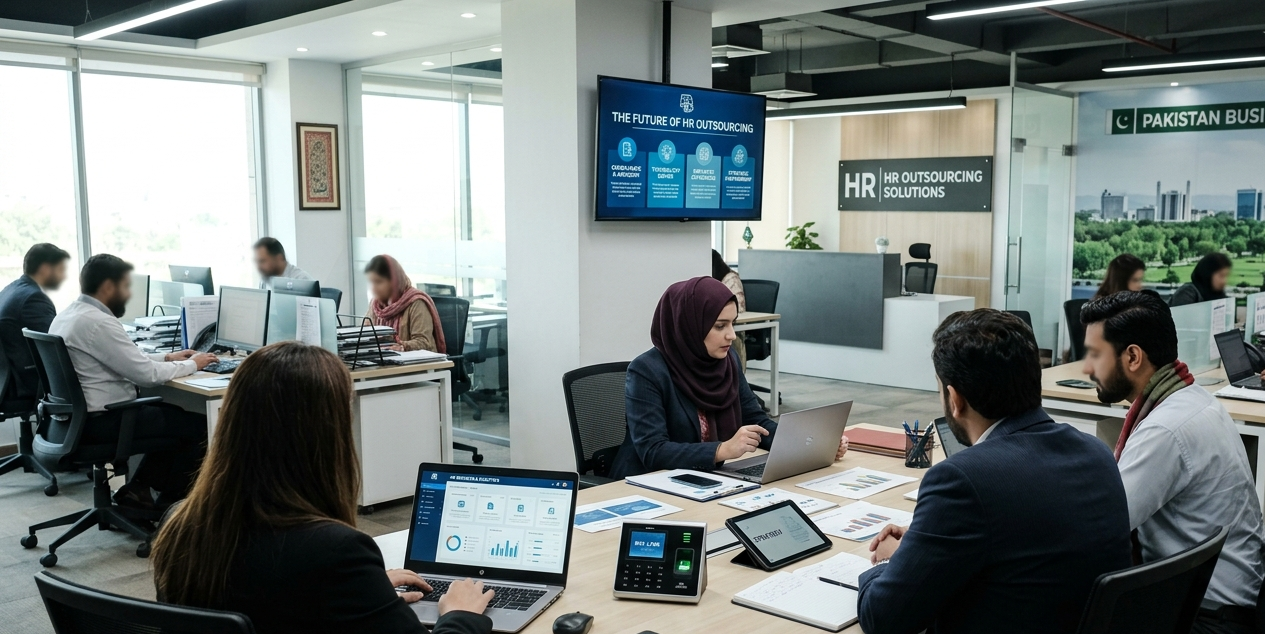
The future of HR outsourcing will also depend on technology. Manual systems are no longer enough. Clients will expect dashboards, attendance systems, digital records, automated payroll reports, employee portals, and real-time visibility.
Technology can improve transparency between the client, outsourcing company, and employee. It can reduce disputes, delays, and errors.
HR outsourcing firms that invest in technology will have a competitive advantage over those relying only on traditional paperwork.
Employee Experience Will Matter
Outsourced employees are often the face of the client’s business. If they are poorly managed, under-informed, or ignored, the client’s operations suffer. Therefore, employee experience must become a priority.
Outsourcing firms must create proper communication channels, timely salary disbursement, grievance mechanisms, training support, and respectful treatment of deployed staff.
An employee may be outsourced administratively, but he or she must not feel abandoned professionally.
The Need for Ethical Outsourcing
The future of HR outsourcing must be ethical. It should not be treated as a way to avoid responsibility toward workers. Instead, it should be a professional mechanism to manage employment responsibly.
Outsourcing firms must ensure transparency, lawful employment practices, fair treatment, and proper communication. Clients must also understand that quality outsourcing has a cost. Extremely low-cost arrangements often lead to weak service, poor compliance, and employee dissatisfaction.
Final Thought
HR outsourcing in Pakistan has a strong future, but only for those who move beyond basic manpower supply. The next generation of HR outsourcing will require professionalism, compliance, technology, transparency, and human-centered management.
The organizations that understand this shift will build stronger, cleaner, and more sustainable workforce systems.
The future belongs to HR outsourcing firms that can combine efficiency with responsibility.