Managing Gen Z at Work: Bridging Generations in Pakistan
By Rana Khurram Ali Khan
RKA Perspective
For the first time, many Pakistani workplaces have four generations working together. Senior leaders may belong to the Baby Boomer or Generation X cohorts, middle management is largely represented by Millennials, while Generation Z is rapidly entering the workforce.
Gen Z—generally referring to those born between the late 1990s and early 2010s—has grown up in a world very different from that experienced by previous generations. They have always known smartphones, social media, instant communication and unlimited access to information. Their education was disrupted by a pandemic, their careers are beginning during a period of economic uncertainty, and they are constantly exposed to global lifestyles and employment opportunities.
This generation is often described as impatient, overly sensitive, informal and unwilling to demonstrate loyalty. However, such labels oversimplify a much more complex reality. Gen Z is not necessarily less committed; it simply defines commitment differently.
The challenge for Generation X and Millennials is therefore not to force young employees to become replicas of themselves. It is to create an environment in which the strengths of Gen Z can be converted into performance, innovation and responsible leadership.
Understanding Gen Z in the Pakistani Context
Pakistani Gen Z lives between two very different worlds.
At home, many young people remain part of traditional family structures where elders make important decisions and obedience is expected. At the same time, digital platforms expose them to international ideas about independence, flexibility, inclusion, mental health, entrepreneurship and personal choice.
This creates a unique combination. A young employee may appear confident online but feel uncomfortable speaking in a formal meeting. Another may question an organizational practice yet hesitate to challenge a senior manager directly. Many want independence but continue to carry significant family expectations and financial responsibilities.
They also enter a labour market where good opportunities are limited, inflation is high and the connection between educational qualifications and employability is often weak. Many graduates have degrees but lack workplace exposure, professional communication skills and practical problem-solving experience.
Employers sometimes interpret this lack of readiness as a poor attitude. Young employees, on the other hand, may see organizations as outdated, excessively hierarchical and unwilling to invest in their development. Both sides develop assumptions about each other before a genuine working relationship has even begun.
What Gen Z Brings to the Workplace
Despite the concerns frequently expressed about this generation, Gen Z offers capabilities that Pakistani organizations urgently need.
They are comfortable with technology and generally learn digital tools quickly. They can explore information, compare alternatives and find new ways of completing routine tasks. They are often more willing to experiment with artificial intelligence, digital marketing, online collaboration and data-driven work.
They also bring fresh perspectives. Since they are less attached to “the way things have always been done,” they may notice inefficiencies that experienced employees have gradually accepted as normal.
Gen Z is also more willing to discuss workplace culture, fairness, psychological safety and employee well-being. While senior managers may sometimes consider these concerns unnecessary, organizations that ignore them may struggle to attract and retain capable young professionals.
Their questioning nature can be useful. An employee who asks, “Why do we do it this way?” may not be challenging authority; the employee may be identifying an opportunity for improvement.
However, these strengths do not automatically translate into results. Young employees still require direction, discipline, exposure and accountability. The responsibility of senior generations is to provide these without crushing confidence and curiosity.
Replace Command and Control with Clarity
Traditional Pakistani management frequently relies on instructions without explanation. Employees are expected to follow orders because the direction comes from a senior person.
Gen Z responds better when it understands the purpose behind a task. This does not mean that managers must negotiate every instruction. It means explaining what is required, why it matters, when it must be completed and what a successful outcome should look like.
Instead of saying, “Prepare this report immediately,” a manager can explain:
“We need this report by 3:00 p.m. because it will be used in tomorrow’s client meeting. Please verify the figures, highlight the three major issues and keep the summary to one page.”
The authority of the manager remains intact, but the employee receives context, direction and a clear standard of performance.
Give Feedback Frequently
Many traditional organizations provide feedback only when something goes wrong or during the annual appraisal. Gen Z is accustomed to faster responses and may become uncertain or disengaged when it receives no indication of whether its work is satisfactory.
Managers should provide short, regular and specific feedback. Appreciation should identify what was done well, while corrective feedback should focus on the work rather than attacking the individual.
“You are careless” is a personal judgment.
“The client’s name and two figures were incorrect; please introduce a final verification step before submitting future reports” is actionable feedback.
Frequent feedback does not mean constant praise. Gen Z also needs to learn that professional growth includes hearing uncomfortable truths, correcting mistakes and accepting responsibility. The manager’s role is to make feedback firm, fair and developmental.
Create Respect in Both Directions
Young employees frequently expect respect from their managers, but they must also understand that respect is mutual.
Senior managers should avoid humiliation, public criticism, shouting and dismissive comments such as “You people do not want to work.” These behaviours do not build discipline; they create fear, silence and eventual disengagement.
At the same time, Gen Z employees must learn professional etiquette: meeting deadlines, communicating delays, respecting workplace boundaries, listening to experienced colleagues and understanding that disagreement does not permit discourtesy.
Organizations should not confuse informality with disrespect, but neither should they allow informality to weaken professional standards.
Offer Learning, Exposure and Career Visibility
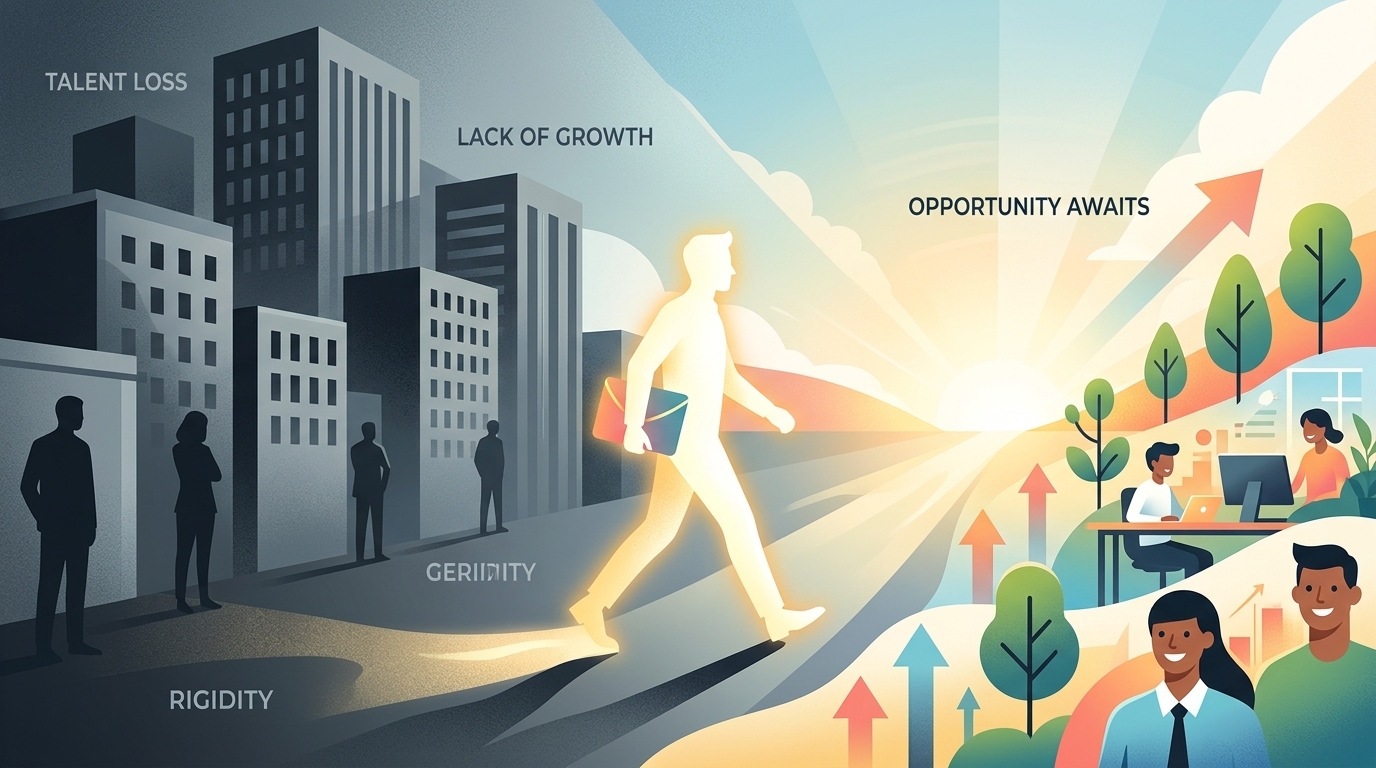
Young employees are less likely to remain in a position where they see no learning or progression. In Pakistan, many organizations expect loyalty without showing employees how their roles may develop.
Managers do not need to promise rapid promotions. They should, however, provide realistic visibility regarding skills, performance expectations and possible career paths.
A practical development approach may include:
- assigning a senior colleague as a mentor;
- involving young employees in cross-functional projects;
- allowing them to observe client meetings;
- providing short, practical learning assignments;
- rotating suitable employees through different responsibilities; and
- discussing career progress at regular intervals.
When young employees can see that they are gaining valuable experience, they are more likely to remain engaged—even if an immediate promotion is unavailable.
Provide Flexibility, but Retain Accountability
Gen Z values flexibility, but flexibility should not be interpreted as the absence of discipline.
Where the nature of work allows, organizations can consider flexible working hours, remote-work options, output-based assignments and reasonable personal accommodation. However, expectations regarding attendance, responsiveness, confidentiality, quality and deadlines must remain clear.
The correct principle is not “work whenever and however you want.” It is:
“We will provide reasonable flexibility, but you remain fully accountable for agreed results.”
This balance is particularly important in Pakistan, where some organizations continue to measure commitment by how late an employee remains in the office rather than by the quality and timeliness of the work produced.
Listen Without Surrendering Leadership
Gen Z wants to be heard. Managers should create opportunities for young employees to present ideas, raise concerns and ask questions.
Listening does not mean accepting every demand. Some expectations may be unrealistic, and some suggestions may reflect limited experience. A good manager listens carefully, explains the decision and remains willing to say no when necessary.
If a suggestion cannot be accepted, the employee should understand why. A reasoned refusal develops maturity; an unexplained rejection creates frustration.
Senior managers should also remember that experience provides depth, but youth sometimes provides visibility into emerging technologies, customer preferences and changing social behaviour. Both perspectives are valuable.
Help Gen Z Develop Resilience
One concern expressed by many employers is that some young employees struggle with pressure, criticism and setbacks. This may be partly because educational institutions often do not prepare students for workplace ambiguity and accountability.
Managers should not protect young employees from every difficult situation. Instead, they should help them work through challenges.
Give them meaningful assignments. Allow them to solve problems. Let them make manageable mistakes. Ask what they learned and what they would do differently next time.
Resilience does not develop through motivational speeches. It develops through responsibility, reflection and supported exposure to difficulty.
What Gen X and Millennials Must Change
Generation X brought discipline, institutional memory and experience to organizations. Millennials helped introduce collaboration, digital adaptation and a greater focus on employee engagement. Both generations now have an important responsibility: to prepare Gen Z without demanding that it abandon its identity.
This requires senior generations to reconsider certain habits:
- Do not equate silence with respect.
- Do not assume that long working hours always represent productivity.
- Do not use experience as a reason to reject every new idea.
- Do not expect loyalty without fairness, development and recognition.
- Do not publicly embarrass employees in the name of discipline.
- Do not dismiss conversations about mental health and workplace well-being.
- Do not provide a designation without meaningful responsibility.
- Do not expect young employees to understand unwritten workplace rules automatically.
At the same time, Gen X and Millennials must pass on what Gen Z cannot learn from a screen: judgment, patience, relationship management, institutional understanding, ethical decision-making and the ability to work through difficult situations.
What Gen Z Must Learn
The responsibility for bridging the generational gap does not rest entirely with senior employees. Gen Z must also recognize that confidence is not a substitute for competence.
Young professionals need to understand that:
- career growth takes time;
- every task will not be exciting;
- feedback is not always a personal attack;
- digital knowledge does not replace business understanding;
- flexibility must be supported by reliability;
- professional relationships require patience;
- a first job is also a place to learn discipline; and
- changing jobs repeatedly without developing depth may eventually weaken a career.
Organizations should communicate these lessons openly rather than expecting young employees to discover them through failure.
From Generational Conflict to Generational Partnership
The objective should not be to decide which generation is better. Every generation has been shaped by different economic conditions, technologies, family systems and workplace experiences.
Pakistan cannot afford a prolonged conflict between experienced leaders and its emerging workforce. The country has a large young population, and its economic future will depend significantly on how effectively organizations develop that talent.
Gen X and Millennials possess experience, professional networks and institutional knowledge. Gen Z brings energy, technological confidence and a willingness to question established practices. When these qualities are combined, organizations can become more productive, innovative and responsive.
The best managers will not complain that “young people have changed.” They will recognize that the world has changed—and that leadership must change with it.
Managing Gen Z does not require lowering standards. It requires communicating standards more clearly, developing people more deliberately and leading with both firmness and empathy.
If Pakistan’s senior generations can guide without controlling, listen without surrendering responsibility and provide opportunity without abandoning accountability, they will not merely manage Gen Z. They will prepare a generation capable of leading the country’s workplaces into the future.